_________________________________
Click on the image to open the article in PDF format.
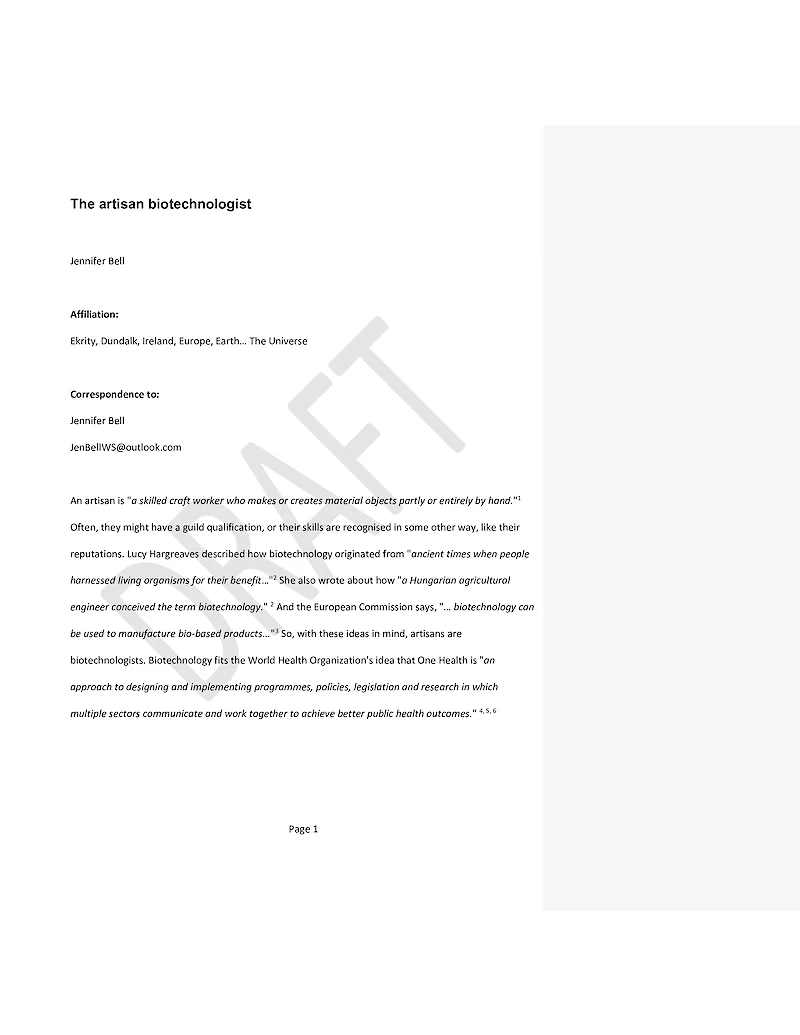
My European Medical Writers Association (EMWA) work is voluntary. Creating a draft is part of the process of publishing an article. This draft, The artisan biotechnologist, is an early draft of Where artisan, environmental, and medical biotechnology meet (the next article along).
The EMWA journal that I write for is called Medical Writing and this draft is artisan and environment heavy. I worked with my editorial team to redraft the article content to be more medical heavy. Look at Where artisan, environmental, and medical biotechnology meet to see the published article.
Even though this early draft was not published it is still important because it is something I did "along the way." The content might be helpful to local communities as food for thought.
I think connections between biotechnology and how it impacts everyday life can and should be drawn. In addition, it is important to know that biotechnology might be animal- or non-animal-based. Biotechnology should not be feared. And it is important to know how important farmers and agriculture are to our global health.
Most artisan products contain bio-based ingredients that are generally grown during agriculture. For example, grains, fruits, and vegetables used in baking, brewing, and distilling; wood used to make furniture, chopping boards, musical instruments, and ornaments (Is tree growing a form of agriculture?); dairy products used in food production, animal hair to make clothes and soft furnishings, various meat products to eat, and byproducts of meat production that often make clothes and other things, for example, footwear, belts, bags, skins, and strings for musical instruments, and filters for wine production.
Click on the image to open the article in PDF format.